Beijing Warns of Retaliation Over Taiwan Leader's US Visit, But Faces Greater Stakes This Time
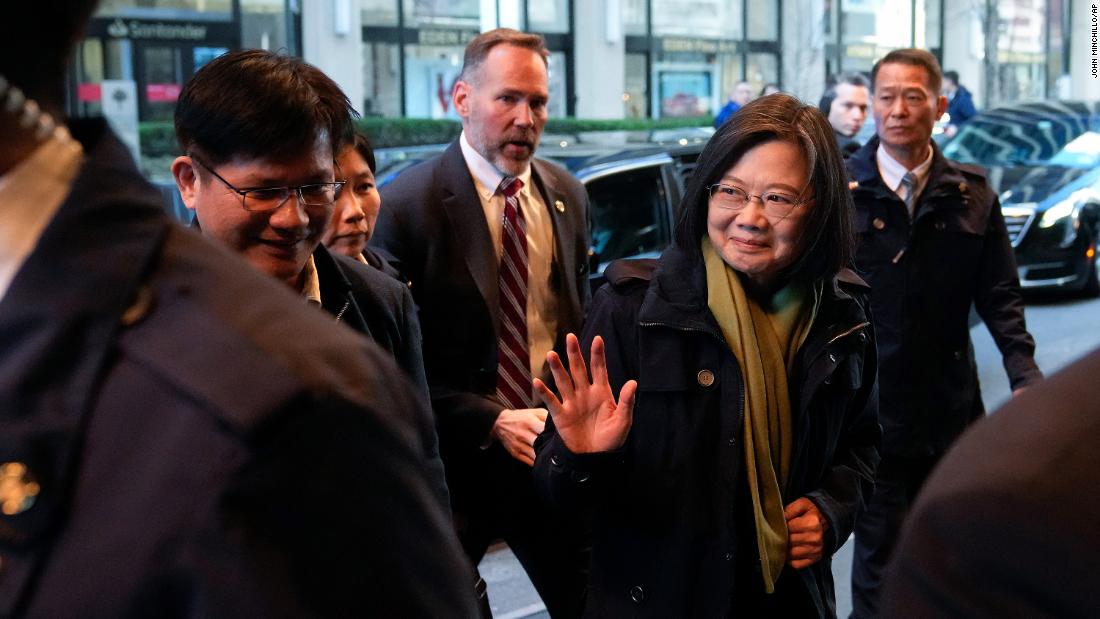
China has renewed its threats to "fight back" as Taiwan's President Tsai Ing-wen prepares to meet with US House Speaker Kevin McCarthy in California, raising fears of a dangerous escalation in tensions across the Taiwan Strait.
The anticipated meeting has drawn immediate comparisons to the firestorm that erupted last August, when then-Speaker Nancy Pelosi made a high-profile visit to Taipei. That visit triggered an aggressive Chinese military response, including large-scale live-fire military exercises and missile launches in waters surrounding Taiwan.
However, analysts and observers suggest that Beijing now finds itself in a more complicated position than it did during the Pelosi episode. China's economy continues to face significant headwinds following years of strict COVID-19 lockdowns, and its leadership is working to stabilize diplomatic and trade relationships with the West following a period of heightened friction.
Unlike Pelosi's direct visit to Taipei, Tsai's meeting with McCarthy is taking place on US soil as part of a transit stop, a distinction that some diplomatic observers believe gives Beijing slightly less grounds for a dramatic military response. Taiwan's president has made similar transit stops through the United States before, and such visits have been a long-standing, if contentious, practice.
The Taiwan issue remains among the most sensitive flash points in US-China relations. Beijing considers Taiwan a breakaway province that must eventually be reunited with the mainland, while the United States maintains a policy of strategic ambiguity, officially acknowledging Beijing's position without explicitly endorsing it, while continuing to supply Taiwan with defensive weapons.
With high-level diplomatic channels between Washington and Beijing still fragile following a series of recent disputes, including tensions over a suspected Chinese spy balloon shot down over US territory earlier this year, the timing of the Tsai-McCarthy meeting adds another layer of complexity to an already strained relationship.
The international community is watching closely to see how Beijing calibrates its response, knowing that an overly aggressive reaction could further damage China's global standing at a moment when its leadership is seeking greater economic and political stability on the world stage.