China's Complex Role in the Iran Conflict Comes Under Scrutiny
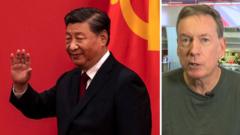
As tensions in the Gulf region continue to escalate, BBC Security Correspondent Frank Gardner has turned his attention to one of the most consequential yet often overlooked dimensions of the crisis: the role being played by China, the world's second-largest economy.
Gardner, one of the most respected security analysts in British broadcasting, has been examining how Beijing's deep economic and strategic ties with Tehran are shaping the broader dynamics of the conflict. China has long maintained close relations with Iran, serving as one of its most significant trading partners and a crucial buyer of Iranian oil despite Western-led sanctions.
The relationship between Beijing and Tehran is widely considered a cornerstone of Iran's ability to withstand international economic pressure. China's continued engagement with Iran has provided the Islamic Republic with an economic lifeline, complicating efforts by Western nations to isolate Tehran on the global stage.
Gardner's analysis arrives at a critical moment, as world powers are closely watching how the Gulf conflict unfolds and what it may mean for regional and global stability. China's position is particularly delicate, as Beijing has historically presented itself as a neutral mediator while simultaneously protecting its substantial economic interests in the region.
The question of China's influence is not merely economic. Beijing holds significant diplomatic leverage and has the capacity to shape outcomes through its relationships with multiple actors across the Middle East, making its stance a matter of intense interest to analysts and policymakers alike.
As the situation in the Gulf develops, Gardner's assessment underscores the importance of understanding the full geopolitical picture. China's role, whether passive or active, is increasingly seen as a key variable in determining how the conflict progresses and how the international community responds.