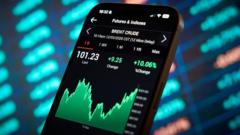
Oil markets and Donald Trump have developed a peculiar relationship, one that analysts are increasingly watching with fascination as the former and now-returned president's words continue to ripple through global energy trading. The sensitivity of crude prices to Trump's statements about ongoing conflicts has become a defining feature of modern commodity markets.
Since Trump's return to the political spotlight, traders have closely monitored his every comment regarding the war and broader geopolitical tensions. His remarks have repeatedly triggered notable movements in oil prices, reflecting how deeply intertwined political communication and energy markets have become in the current global environment.
However, a critical question is now emerging among market observers: are traders beginning to tune out? There are signs that the responsiveness of oil markets to Trump's commentary may be diminishing, suggesting a phenomenon some analysts describe as "noise fatigue," where repeated signals gradually lose their power to move prices dramatically.
This pattern is not entirely unprecedented in financial markets. When any influential figure speaks frequently on market-sensitive topics, investors often recalibrate their reactions over time, discounting statements they perceive as routine or unlikely to translate into concrete policy action.
The relationship between political rhetoric and oil prices carries enormous global consequences, given that crude oil remains the lifeblood of the world economy. Fluctuations driven by political commentary rather than fundamental supply and demand factors can create volatility that affects everything from fuel prices at the pump to inflation rates in countries far removed from the original conflict.
BBC News has mapped this dynamic across six charts, illustrating the evolving tango between Trump's public statements and the movements of oil benchmarks over time. The visual analysis offers a striking portrait of how markets initially jumped at his words before potentially settling into a more measured response.
Whether this apparent desensitization represents a lasting shift or merely a temporary lull remains an open question for analysts and traders alike. As geopolitical tensions persist and Trump continues to weigh in on global conflicts, the oil markets will likely remain a key barometer of how seriously investors are taking the words of one of the world's most consequential political figures.