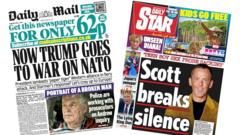
Trump's Explosive Nato Threat Dominates Front Pages as Scott Breaks Silence
Thursday's newspaper front pages are dominated by two major stories, with President Donald Trump's provocative comments about potentially withdrawing the United States from Nato sending shockwaves through the political establishment and allied nations across the world.
The dramatic headlines, led by the striking phrase "Trump goes to war on Nato," reflect the gravity with which editors and political commentators are treating the US president's latest remarks. The prospect of an American withdrawal from the Western military alliance has long been considered one of the most destabilising scenarios in modern geopolitics.
Nato, which was founded in 1949 in the aftermath of World War Two, has served as the cornerstone of Western collective security for more than seven decades. The alliance operates on the principle that an attack against one member is considered an attack against all, a commitment that has underpinned European security throughout the Cold War and beyond.
Trump's comments have reignited long-standing tensions over defence spending commitments among member states, a point of contention he has repeatedly raised throughout his political career. The remarks have prompted urgent reactions from European capitals, where leaders have consistently urged Washington to reaffirm its dedication to the alliance.
Alongside the Nato story, several front pages are also carrying reports that a prominent figure identified only as Scott has broken a period of public silence, suggesting a significant personal or political statement has been made. The nature of Scott's comments and their wider implications are generating considerable media interest alongside the Nato coverage.
The convergence of these two major stories on a single day reflects an increasingly turbulent news environment, with political developments on both sides of the Atlantic continuing to command intense scrutiny from journalists and the public alike.