'This Has Got Me Worried': Iranians Fear What Comes Next After US Strike on Karaj Bridge
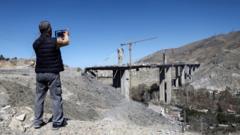
Anxiety is spreading across Iran following a United States strike on a bridge in Karaj, with ordinary citizens expressing deep concern about what further military action may lie ahead. The attack has rattled a population already living under the weight of economic hardship and long-standing international tensions.
President Donald Trump has issued stark warnings to Iranian leaders, threatening to target bridges and electric power plants if Tehran does not agree to his terms to bring the ongoing conflict to an end. The ultimatum has left many Iranians fearful that critical civilian infrastructure could be next in line for destruction.
Karaj, a major city west of the Iranian capital Tehran, is home to millions of residents, and the strike on its bridge has brought the reality of potential wider conflict uncomfortably close to everyday life. For many citizens, the attack has shifted what once felt like distant geopolitical maneuvering into an immediate personal concern.
The prospect of strikes on power plants has drawn particular alarm, as such attacks would have sweeping consequences for hospitals, water treatment facilities, and ordinary households. Disruptions to electrical infrastructure in a country already struggling economically could prove catastrophic for vulnerable populations.
Iran and the United States have maintained a deeply adversarial relationship for decades, dating back to the 1979 Islamic Revolution, with tensions periodically flaring over Iran's nuclear programme, regional military activity, and sanctions. Diplomatic efforts to reach a negotiated agreement have repeatedly stalled over the years.
Trump's approach signals a continuation of his long-held "maximum pressure" strategy toward Tehran, which characterised his first term in office and involved sweeping economic sanctions designed to force Iran back to the negotiating table. Whether that pressure will yield a diplomatic resolution or push the two nations further toward open confrontation remains deeply uncertain.
For the people of Iran, the calculations of governments and military strategists feel increasingly personal. As one sentiment circulating among the Iranian public captured it plainly: "This has got me worried."