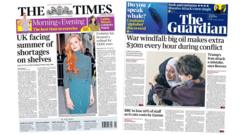
Thursday's front pages are dominated by two major stories gripping Britain and the wider world: the looming threat of a "summer of shortages" tied to escalating tensions involving Iran, and the significant financial windfalls being enjoyed by major oil companies amid the turbulent global energy landscape.
Several newspapers are warning that the ongoing conflict involving Iran could have direct and painful consequences for British consumers, with supermarket shelves potentially facing supply disruptions during the coming summer months. The fears centre on how regional instability can ripple outward, disrupting global trade routes and supply chains that the UK relies upon heavily for everyday goods.
Britain imports a substantial portion of its food and consumer products, making it particularly vulnerable to any prolonged disruption in key shipping corridors. The prospect of shortages arriving during the summer period, when demand for certain goods traditionally peaks, has added urgency to the concerns being raised across the press.
Meanwhile, the so-called "war windfall" story is drawing significant attention, with major oil producers and energy companies appearing to benefit financially from the instability gripping the Middle East. Conflict and geopolitical uncertainty in oil-producing regions have historically driven up crude prices, and the current situation appears to be following a familiar and controversial pattern.
The juxtaposition of ordinary families facing potential shortages while large energy corporations record substantial profits is proving to be a potent and politically charged narrative. It is a tension that has resurfaced repeatedly in recent years, particularly in the aftermath of the energy crisis that followed Russia's invasion of Ukraine.
Both stories reflect the broader anxiety felt across the United Kingdom as global events continue to have direct consequences on daily life at home. Political leaders are likely to face mounting pressure to address supply chain resilience and to respond to public anger over the perceived profiteering that can accompany periods of international conflict and instability.