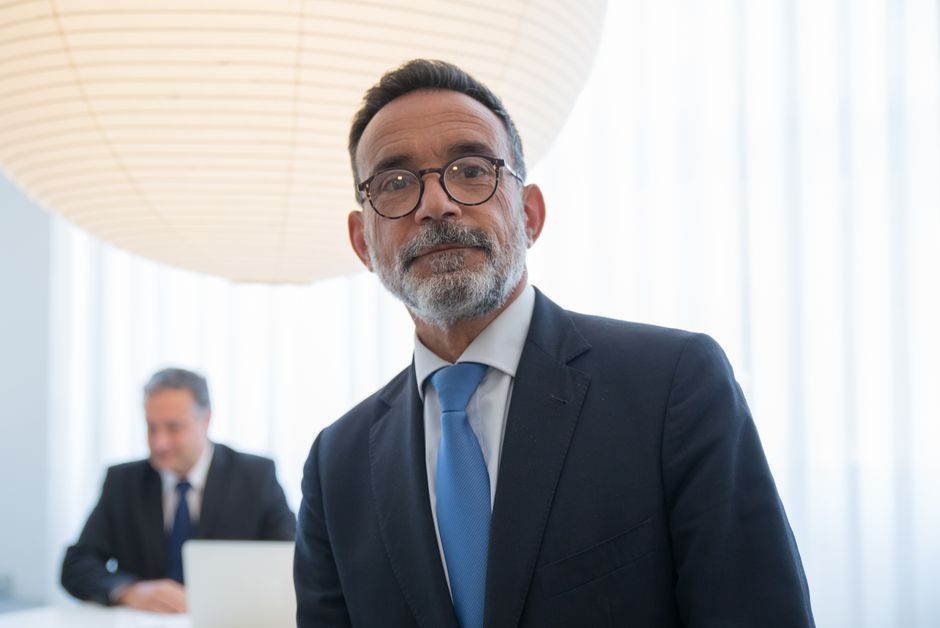
Disney has named its first-ever Chief Technology Officer, appointing Karandeep Anand to the newly created role, according to The Verge. Anand comes to the position from Character.AI, where he served as chief executive officer, marking a notable shift for someone moving from the helm of an AI startup into a sprawling legacy entertainment conglomerate.
The more arresting detail in The Verge's report is not who Anand is, but what his appointment reveals about Disney. A company founded in 1923, one that operates theme parks, cruise lines, broadcast networks, a major film studio, and one of the more significant streaming platforms in the world, has somehow reached this point in history without ever formally designating a chief technology officer. That is a remarkable organizational fact. It suggests that for most of its life, Disney thought of technology as a tool subordinate to content — something the engineers and IT departments handled quietly in the background while the creatives ran the show. The appointment of a CTO at this particular moment, and the specific background of the person chosen, signals that leadership has decided that framing is no longer adequate.
The timing is not coincidental. The entertainment industry is navigating a period of genuine technological disruption, and Disney is feeling pressure from multiple directions simultaneously. Streaming economics remain brutally difficult; the company spent years and considerable resources building Disney Plus into a competitive platform, and while subscriber numbers have been significant, the path to reliable profitability has proven more complicated than early projections suggested. At the same time, artificial intelligence is beginning to reshape every stage of content production, from scriptwriting assistance and visual effects to personalization algorithms and content moderation. A company that lacks a unified technology leadership structure is poorly positioned to make coherent decisions across all of those fronts at once.
Anand's specific background is worth examining carefully. Character.AI, the platform he led, is among the more prominent consumer-facing AI companies to emerge in the current wave of generative AI development. The product is built around conversational AI personas — artificial characters that users interact with in extended, open-ended exchanges. That experience sits at a peculiar intersection of technology and character-driven storytelling, which is as close to Disney's core business as an AI background is likely to get. Whether or not that alignment was deliberate, it is the likely reading of why Disney found him compelling for this particular role, over, say, someone with a background in infrastructure or enterprise software.
The consequences of this appointment will ripple in several directions. Internally, the creation of the CTO role formalizes something that large, complex organizations often resist: a single point of accountability for technology strategy. That will inevitably create friction with existing power structures. Disney's various divisions — parks, studios, streaming, consumer products — have historically operated with considerable independence, each managing its own technical infrastructure and vendor relationships. A CTO with genuine authority represents centralization, and centralization in a decentralized culture tends to generate bureaucratic resistance before it generates efficiency.
Externally, the hire sends a message to the industry about where Disney believes the competitive pressure is coming from. By choosing someone whose most recent prominent role was at an AI company, Disney is signaling that it sees artificial intelligence not as a peripheral concern but as something that belongs at the executive table. That will matter to partners, to rivals, and to the creative unions that have spent the past few years negotiating hard over protections against AI-generated content replacing human labor. Anand will walk into a company that has already made promises and reached agreements in that space, and his mandate will have to operate within those constraints, at least for now.
There is also a question about what happens to Character.AI and what Anand's departure says about conditions there. Executive transitions at AI startups can reflect many things — a successful outcome, a strategic pivot, a change in investor sentiment, or simply a better offer — and without more information it would be unwise to read too much into it. But the direction of travel, from AI startup CEO to legacy media CTO, is an interesting one at a moment when many in the industry assumed the flow of talent would move the other way.
The clearest thing to watch for in the months ahead is how much actual authority the new CTO role carries. Titles can be generous and power can be modest. If Anand is granted genuine cross-divisional influence over technology investment and AI strategy, the appointment is transformative. If the role proves largely advisory or symbolic, it will be remembered as a branding exercise. Disney's next technology-related decisions — particularly around AI adoption, streaming infrastructure investment, and any future labor negotiations touching on digital tools — will be the real measure of what this moment actually means.