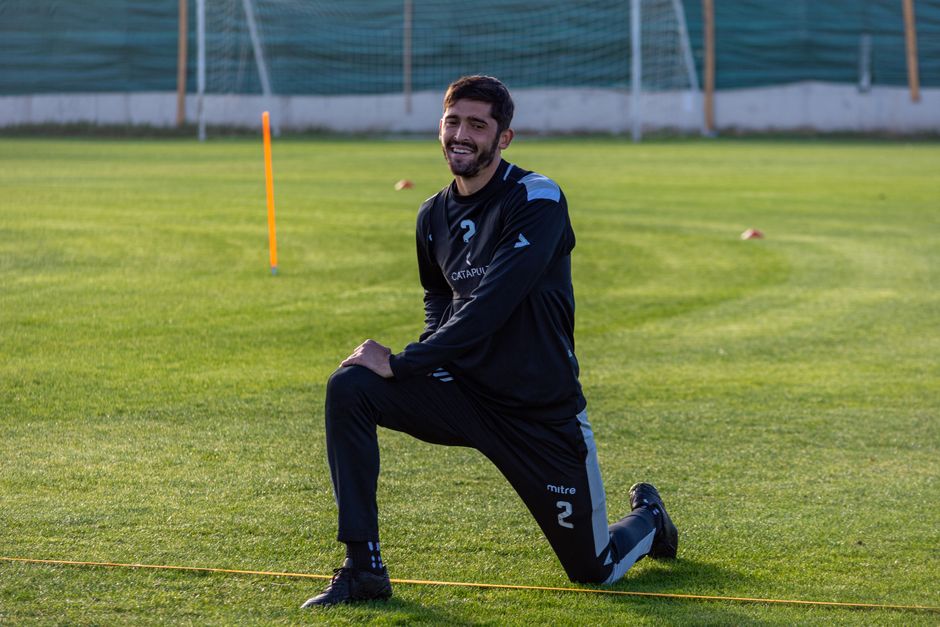
The Verge has run a profile on Andy Holloway, co-host of The Fantasy Footballers podcast, touching on his personal productivity habits — specifically his commitment to maintaining an empty email inbox. The show, which Holloway hosts alongside Jason Moore and Mike Wright, draws more than two million monthly listeners and has collected notable industry recognition, including Best Sports Podcast from iHeartRadio and a People's Choice award at the Podcast Awards.
On the surface, a podcaster's email habits seem like thin material for a technology publication. But The Verge's interest here fits a well-established editorial pattern: using the personal workflows of high-profile media figures as a lens for examining how people navigate the attention economy. The zero-inbox philosophy — often associated with productivity consultant Merlin Mann, who popularized the concept in the mid-2000s as a response to email overload — has become something of a cultural signifier. Practitioners tend to treat it less as a filing system and more as a psychological stance, an argument that unread notifications carry a cognitive weight that compounds over time. Whether the discipline actually improves output is contested, but its symbolic value in conversations about focus and mental clarity has given it staying power in technology and productivity circles far beyond its practical origins.
The Fantasy Footballers sit at an interesting intersection for this kind of story. Fantasy sports podcasting is, by the standards of independent media, a remarkably demanding content operation. The show runs effectively year-round, with the NFL offseason generating its own steady cycle of roster moves, draft analysis and trade speculation. During the season proper, the cadence intensifies dramatically — multiple episodes per week, time-sensitive information, and an audience that expects accuracy under deadline pressure not unlike a live sports desk. Managing communication at that volume, across a co-hosted format with production staff and a business operation behind it, is a genuine organizational challenge. The choice to spotlight Holloway's inbox approach suggests The Verge sees his workflow as illustrative of something broader about how independent creators handle scale.
The podcast industry has matured considerably since The Fantasy Footballers launched, and the pressures facing shows at their level have matured with it. What began as a hobbyist medium has, for its most successful practitioners, become a full media enterprise with advertising relationships, subscriber tiers, social channels and the attendant administrative surface area that brings. The irony is that tools designed to reduce friction — email, Slack, content management platforms — often generate their own layer of friction at scale. This likely explains part of why a story about one host's inbox discipline reads as relevant rather than trivial. It reflects a real tension that anyone running a media operation, large or small, will recognize.
The consequences of this kind of profile are modest but real. For Holloway and The Fantasy Footballers, the attention from a publication like The Verge extends their brand into a technology-literate readership that may not overlap heavily with core fantasy sports audiences. That crossover appeal has tangible value for a show whose growth at two million monthly listeners likely requires reaching beyond the already-converted. For The Verge's readership, the likely reading is that this piece functions as part of a recurring series on how notable people manage digital life — a format that performs reliably because it flatters readers who take their own productivity seriously and enjoy benchmarking their habits against others.
More broadly, the piece contributes, however incrementally, to the ongoing cultural negotiation over what good digital hygiene looks like. Zero-inbox remains a contested practice. Critics argue it can become its own form of compulsion, trading the anxiety of unread messages for the anxiety of keeping the count down. Proponents, Holloway apparently among them, treat it as a foundation for clearer thinking. Neither camp is likely to convert the other, but the conversation itself keeps surfacing because the underlying problem — an information environment that produces more input than any individual can meaningfully process — keeps getting worse, not better.
What to watch for next is whether profiles like this one prompt the broader podcast industry to engage more openly with the operational and psychological demands of running shows at significant scale. The creator economy has produced enormous amounts of content about how to grow an audience, and relatively little honest accounting of what sustaining one actually costs in attention and organizational overhead. If the Fantasy Footballers' continued expansion into media and merchandise continues, the workflow questions surrounding the show will only become more pointed. And if The Verge is running this piece as part of a larger series, the choice of subsequent subjects will reveal something about which corners of independent media the publication considers worth treating as serious professional endeavors.