Tesla's Semi, the company's long-haul electric freight truck, is confronting an infrastructure problem that may prove harder to solve than the engineering challenges of building the vehicle itself, according to reporting by Ars Technica. The core difficulty is that the charging network capable of supporting heavy commercial trucking at scale simply does not yet exist in the form the industry would need.
To understand why this matters, it helps to zoom out from Tesla specifically and look at what long-haul trucking actually demands. A Class 8 diesel truck can be refueled in under fifteen minutes at any of tens of thousands of truck stops spread across the country, many of which are open around the clock and designed specifically for the rhythms of commercial freight — wide turning radii, overnight parking, facilities for drivers on federally mandated rest breaks. The economics of trucking are built around asset utilization: a truck that is not moving is not earning. Even modest charging delays, multiplied across a fleet and across hundreds of routes, can erode the financial case for electrification in ways that do not show up in a spec sheet.
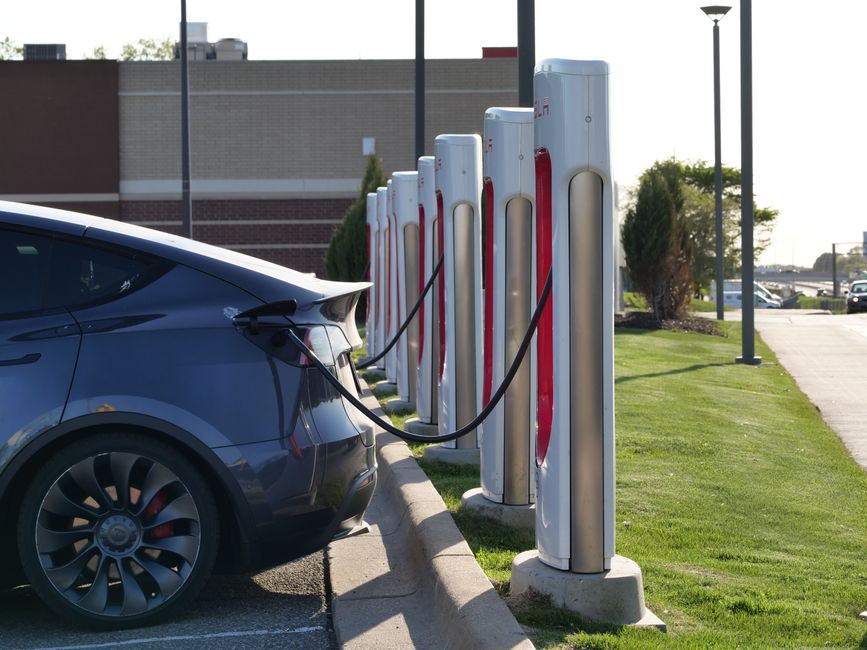
Tesla's own Supercharger network, however impressive it has become for passenger vehicles, was designed around a fundamentally different use case. Cars charge overnight at home or top up during a road trip stop of thirty to forty-five minutes. Megawatt-scale charging for a heavy truck is a different proposition entirely — technically, logistically, and in terms of the grid capacity required at each site. The industry has a developing standard, known as the Megawatt Charging System, intended to let trucks charge at up to one megawatt, which would allow a significant charge in roughly thirty minutes. But the physical infrastructure to deliver that kind of power, at locations where trucks actually travel, remains sparse.
This puts Tesla in a position that is structurally uncomfortable. The company built its passenger-car business in part by owning the charging experience end to end — the vehicle and the network together. That vertical integration was a genuine competitive advantage. With the Semi, the charging side of that equation is far less developed, and the scale of investment required to fix it is enormous. Building a megawatt charging corridor along major freight routes is not a project any single company is likely to complete quickly, which means Tesla is more dependent on third parties, utilities, and public infrastructure investment than it has ever been with its consumer products.
The competitive context adds another layer of pressure. Other manufacturers, including established players in the commercial vehicle space, are also developing electric heavy trucks, and some are working with charging networks and fleet operators in ways that do not assume one company will control the entire ecosystem. If charging infrastructure develops along more open, interoperable lines — which the Megawatt Charging System standard is intended to encourage — Tesla's historical advantage of owning its own network becomes less relevant in this segment.
Fleet operators, who are the actual buyers of vehicles like the Semi, are also thinking about this differently than a consumer buying a car. A logistics company evaluating an electric truck is not just buying a vehicle; it is underwriting a change to its entire operational model, from driver scheduling to depot infrastructure to route planning. The likely reading of the current situation is that many fleet operators are waiting to see charging reliability demonstrated at scale before committing to large orders, which in turn slows the demand signal that would justify the infrastructure investment. It is a classic coordination problem, and it tends to resolve slowly.
The consequences fall unevenly. Tesla, having staked considerable credibility on the Semi and having delivered initial vehicles to at least one major customer, needs charging infrastructure to mature quickly enough to match whatever production ambitions it has for the truck. Utilities and grid operators face their own planning challenges, since megawatt-scale charging sites create significant local demand spikes that require upgrades. Trucking companies large enough to build their own private charging depots are in a different position than smaller operators who depend on public or shared infrastructure. And the broader decarbonization case for freight, which policymakers and regulators are watching closely, depends on whether these pieces come together in a reasonable timeframe.
What to watch for next is relatively clear. The pace at which megawatt charging stations appear along major freight corridors — Interstate 5 on the West Coast is an obvious early indicator given Tesla's California presence — will be a leading signal of whether the infrastructure gap is closing. Announcements from utilities about grid upgrade timelines, and from charging network operators about commercial truck deployments, will matter as much as anything Tesla says about its own production plans. The vehicle problem, for Tesla, appears largely solved. The infrastructure problem is where the next several years of the Semi story will be written.