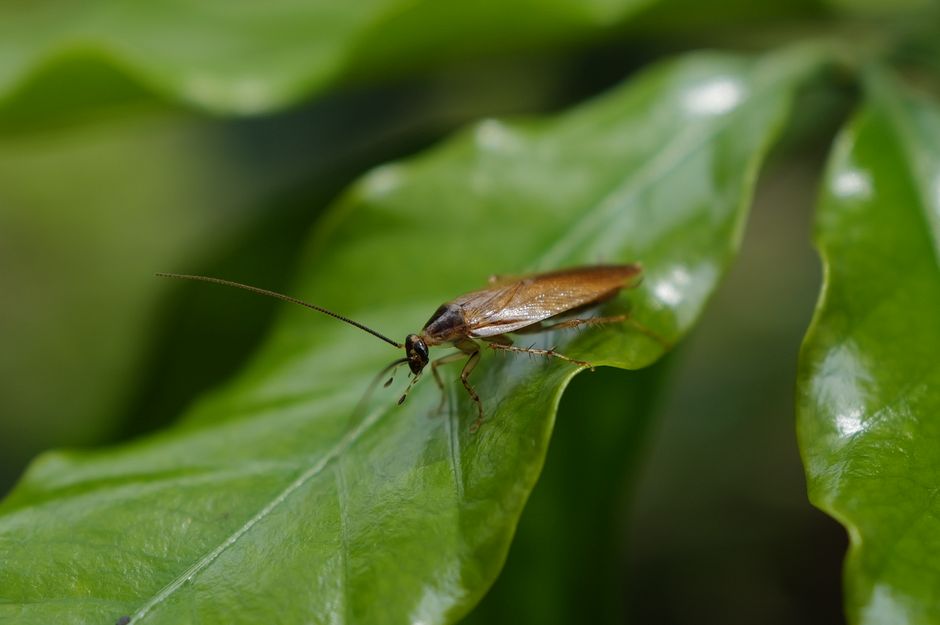
Wired is reporting that researchers have developed remotely controlled cyborg cockroaches fitted with embedded electrodes, cameras, and injection devices capable of delivering medication on command.
The headline sounds like science fiction, and the instinct is to dismiss it as such. But the underlying engineering sits within a research tradition that has been quietly maturing for two decades. The concept of using insects as platforms for surveillance or search-and-rescue dates back at least to DARPA-funded work in the early 2000s, when agencies began exploring whether the nervous systems of beetles and moths could be hijacked mid-flight to steer them toward targets. What has changed is miniaturization. The sensors, wireless modules, and microcontrollers that once would have outweighed any insect that could carry them have shrunk to the point where a cockroach, with its famously robust physiology, becomes a plausible delivery platform rather than a thought experiment.
Cockroaches were not chosen arbitrarily. Researchers have long favored them for biorobotic work because of their resilience — they tolerate crude electrode implantation, survive falls and pressure changes that would destroy delicate manufactured robots, and can navigate uneven terrain that continues to defeat wheeled or even legged machines. The Madagascar hissing cockroach in particular has appeared repeatedly in laboratory demonstrations because of its size and relative docility. The idea of embedding electrodes to stimulate the antennae or cerci, effectively steering the animal by making one side of its environment feel threatening, has been demonstrated in peer-reviewed settings for years. What the team described by Wired appears to have added is the forward-facing instrumentation layer: the camera that transmits what the cockroach sees, and the drug-delivery payload that turns the animal from a sensor node into an active medical agent.
That last element is genuinely new territory, and it is where the analysis gets interesting. Miniaturized drug delivery has been an aspiration in medicine for a long time, pursued through injectable microparticles, implantable pumps, and more recently through swallowable capsule robots. Each approach faces the same core problem: getting a therapeutic payload to a precise location inside a body, or inside a disaster site, without requiring a human hand to place it there. A biological carrier sidesteps several of those engineering constraints entirely. It moves under its own metabolic power, rights itself when overturned, squeezes through gaps that no manufactured device of equivalent payload capacity could navigate, and does so without a battery that needs recharging. The tradeoff is control fidelity — steering an animal through electrode stimulation is probabilistic rather than deterministic, which creates obvious concerns for any application where precision matters.
The consequences of this work, if it scales beyond the laboratory, would be felt in at least two distinct domains. In disaster response, the promise is real. Urban search-and-rescue operations are constrained today by the geometry of collapsed structures. Small wheeled robots lose traction in rubble; flying drones cannot enter enclosed spaces without risking rotor damage; human rescuers cannot reach victims in time when structural integrity is uncertain. A swarm of instrumented insects that can be released into a debris field and steered toward heat signatures or sounds would address a gap that roboticists have struggled with for years. The camera payload means a remote operator can confirm a survivor's location before committing human rescuers or heavy equipment.
The medical delivery angle is more fraught. Administering medication via a remotely controlled animal introduces a chain of variables — the animal's stress response, the sterility of the injection site, the precision of placement — that regulatory frameworks are entirely unprepared to address. The likely reading is that near-term applications would be external rather than internal: applying a topical agent to a wound in a patient who cannot be safely reached, for instance, rather than performing anything resembling targeted internal injection. Even so, the demonstration of the principle matters, because it establishes that the combined system can be miniaturized and coordinated.
There will also be the conversation that always follows this kind of announcement, about the welfare of the animals involved and about the dual-use potential of any technology that amounts to a remotely piloted living creature carrying a camera and a delivery device. Those discussions tend to arrive after the engineering papers and before the policy frameworks, which is to say they arrive too late to shape early development choices.
What to watch for next is whether the research group publishes obstacle-course or structural-collapse trials that test the system under conditions resembling actual disaster scenarios, and whether the drug-delivery component moves from proof-of-concept injection into tests with therapeutically relevant compounds. Independent replication by other groups would also signal that this is a robust platform rather than a single-lab demonstration. The gap between a remarkable laboratory result and a deployable tool remains wide, but in this case, the laboratory result is remarkable enough to justify watching the gap closely.