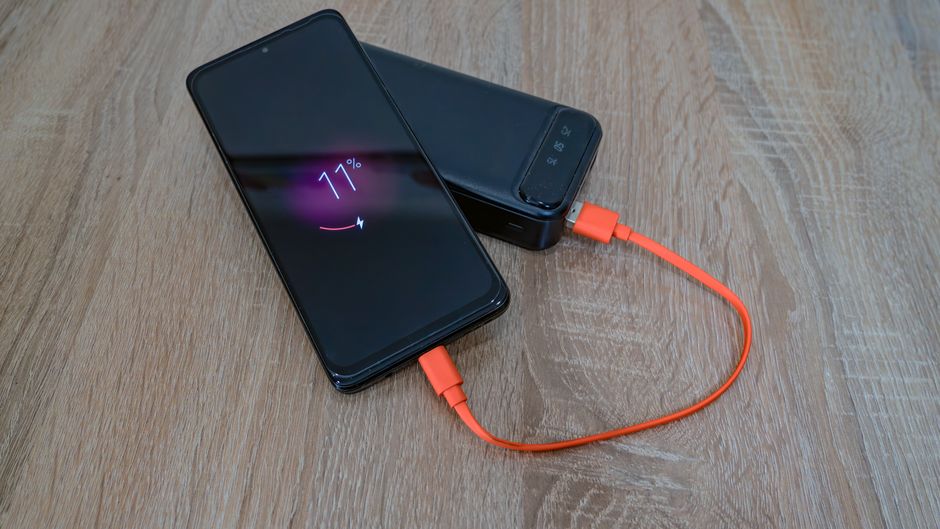
The Verge reports that Jackery has unveiled the Explorer 100D, a new portable power station that the company is billing as its smallest unit to date, measuring just 4.6 by 3.4 by 3.4 inches. The device marks the arrival of lithium iron phosphate battery chemistry — which Jackery first introduced to its lineup in 2023 — at the compact end of the company's product range.
To understand why this matters, it helps to know where the portable power station market has been heading over the last several years. What was once a niche product category, appealing mainly to off-grid enthusiasts and van-lifers, has matured into a genuinely mainstream consumer segment. Jackery, along with rivals like Anker, EcoFlow, and Bluetti, has spent the better part of a decade competing on capacity and output, each successive generation of products promising more wattage in a slightly more manageable form factor. The implicit assumption throughout much of that competition was that serious power meant serious bulk.
The shift toward lithium iron phosphate chemistry complicated that assumption in interesting ways. LFP batteries, as they are commonly abbreviated, have a well-documented set of tradeoffs compared to the more conventional lithium-ion cells that powered the first wave of portable stations. They are thermally more stable, which translates to a meaningfully lower risk of the kind of thermal runaway events that have made some battery-dense products a consumer safety concern. They also tend to support far more charge-discharge cycles before degrading noticeably, which matters a great deal for a product that might be charged from a solar panel every day for years. The downside, historically, has been energy density: LFP cells pack less power into a given volume than their lithium-ion counterparts, which made the chemistry a harder sell in compact products where space is the binding constraint.
Jackery's decision to bring LFP chemistry to the Explorer 100D — a unit small enough to sit comfortably in a coat pocket or a day bag — suggests the company believes that engineering progress has closed enough of that energy-density gap to make the tradeoff worthwhile even at small scales. Whether that is a function of better cell design, tighter packaging, or some combination of the two is not clear from what The Verge has reported, but the directional signal is notable. The safer, longer-lasting chemistry is no longer being reserved for the flagship, high-capacity units where buyers are willing to accept more weight and cost.
The consequences of this play out across a few different dimensions. For consumers, the most immediate effect is expanded choice in a form factor that has historically been underserved by premium chemistry. Someone who wants a pocket-sized backup for a phone, a small camera, or a medical device like a CPAP machine has generally had to accept either limited cycle life or greater bulk. A compact LFP unit, if it performs as advertised, begins to close that gap.
For the broader competitive landscape, the likely reading is that Jackery is trying to defend shelf space at the entry level of the market — the segment where brand loyalty is formed and where competing on price alone is a race to the bottom. By differentiating on chemistry and safety rather than just capacity or cost, the company is making a bet that buyers are increasingly sophisticated about what goes inside the devices they trust with sensitive electronics or, in some cases, their own safety. That bet may prove correct. Consumer awareness of battery chemistry has risen considerably following high-profile incidents with cheaper lithium-ion products in adjacent categories.
There is also a signal here worth reading in the context of the outdoor and emergency preparedness markets, both of which expanded considerably during the pandemic years and have not fully contracted since. Buyers in those segments tend to hold products for longer and weight durability more heavily than, say, a typical consumer electronics buyer replacing a phone accessory every two years. A longer cycle life is a genuine value proposition for that audience, not just a marketing claim.
What to watch for next is whether Jackery extends LFP chemistry further down the price curve, not just down the size curve. The Explorer 100D is compact, but it remains to be seen how aggressively it is priced relative to the company's existing small-format units and to competitors offering similar capacity in conventional lithium-ion packaging. If LFP at this scale can be made cost-competitive, that would represent a more significant shift in the portable power category than any single product launch can convey on its own. The other thing worth watching is how rivals respond — whether EcoFlow, Anker, and Bluetti move to match the form factor with comparable chemistry, or whether they find a different angle to compete on.